Everyone who takes our Saturday class goes home with a jar of our starter. About half of them email us within a month to ask whether it has died. It almost never has. Here is what to expect in the first weeks, and what to do about it.
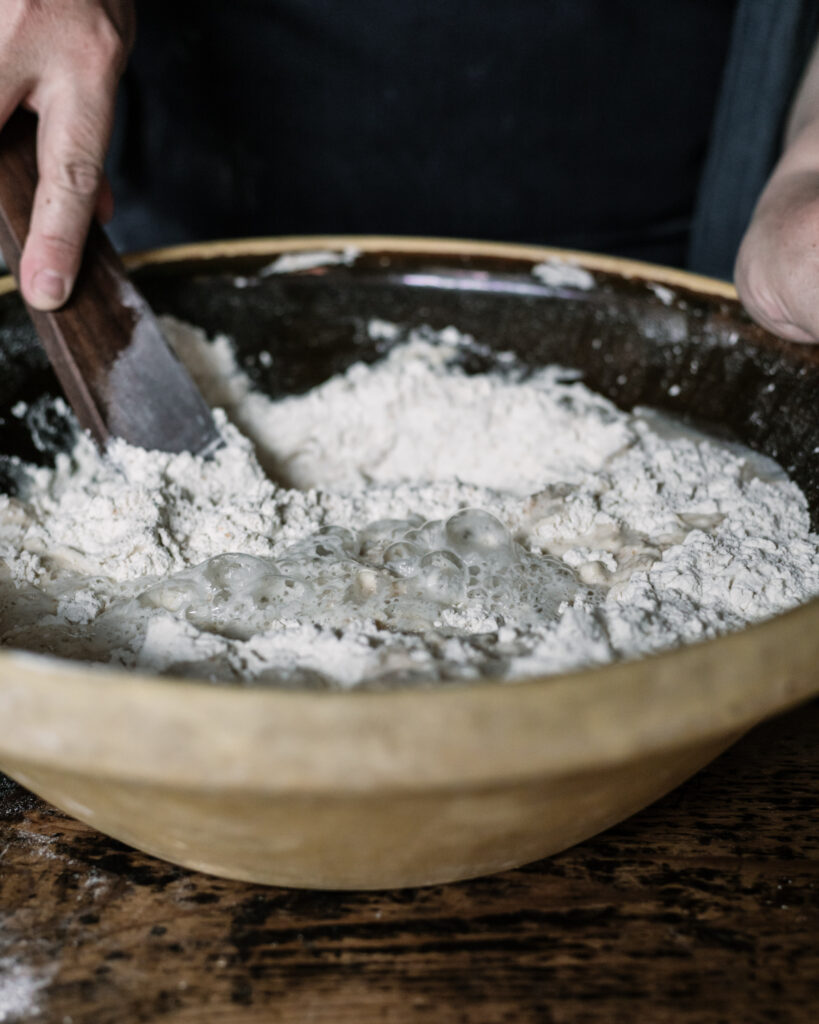

Week one: settle it in
Your starter has moved from a warm bakery to your kitchen and it will sulk. Feed it once a day with equal weights of flour and water, discarding all but a spoonful first. Keep it somewhere steady, away from the window. Do not bake with it yet.
Week two: find its rhythm
By now it should rise and fall on a predictable schedule, usually doubling four to eight hours after a feed. Note the time it peaks. That peak is when it is strongest, and it is when you want to mix your dough.
Week three onwards: the fridge
If you bake once a week, keep the starter in the fridge and feed it once a week. Take it out the day before you bake, give it two feeds at room temperature, and it will be ready.
Signs it is fine, even when it looks alarming
- A grey liquid on top. That is alcohol from a hungry starter. Pour it off and feed.
- A sharp, vinegary smell. Same cause, same cure.
- No rise after one feed. Give it three before worrying.
The one sign it really is finished: pink or orange streaks, or fuzzy mould. Throw it away and ask us for another jar. We have plenty.