Author: siteself-admin

  • The autumn menu is here

    The autumn menu is here

    The first cold morning of the year arrived last week, and with it the moment Priya has been waiting for since July: the autumn pastry case. From this Tuesday, the counter changes over.

    What is new

    • Apple and brown butter danish, made with apples from the orchard stall at the Saturday market.
    • Pear and ginger galette, sold by the slice after 11:00.
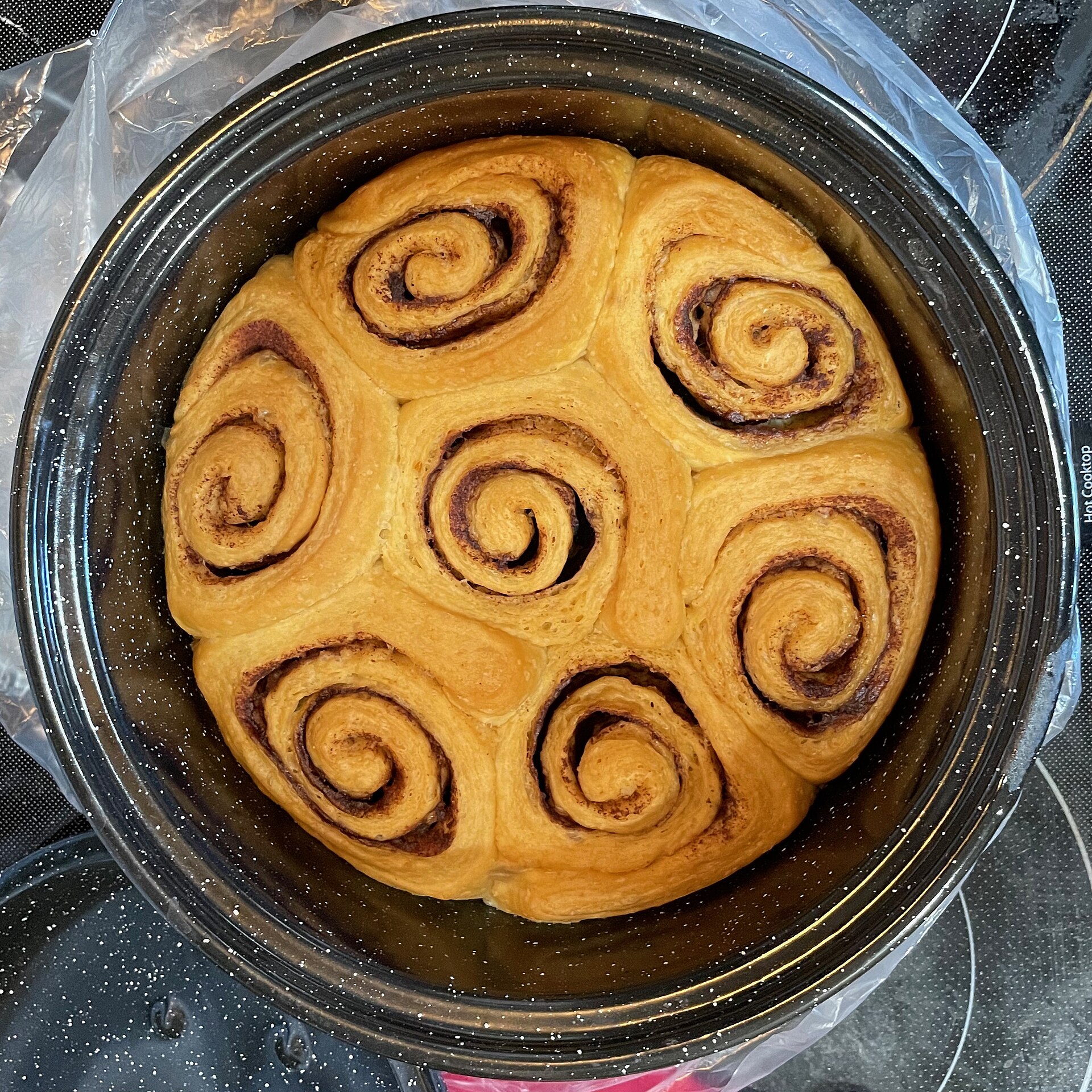
    • Cardamom cinnamon knots, which are the old cinnamon knots with a lot more cardamom, because the team voted.
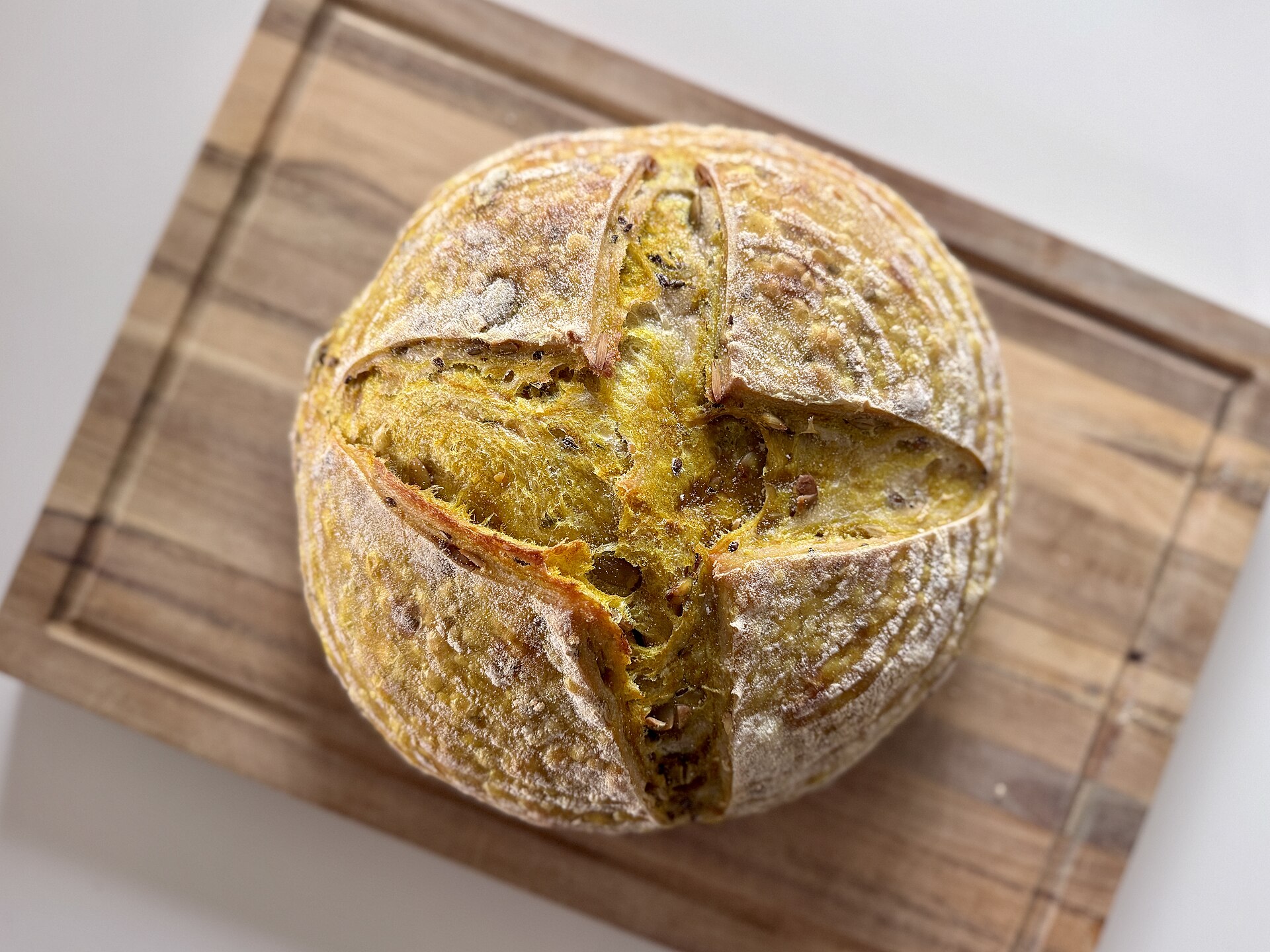
    • Pumpkin seed rye joins the bread shelf on Thursdays and Saturdays.

    What is leaving

    The peach and almond croissant is gone until next summer. We know. We tried to keep it going with tinned fruit for one week in 2022 and nobody, including us, wanted to talk about it afterwards.

    As always, the danish sells out first. If you want one on a Saturday, come before nine or ask us to put one aside when you pass on Friday.
  • What happens to the bread we do not sell

    What happens to the bread we do not sell

    We bake for the day and we try to sell out, but some days we misjudge the weather, a wholesale order changes, or a school holiday empties the street. So what happens to the bread that is left at three o’clock?

    The same afternoon

    Whole loaves go to the Beacon Street shelter, which collects at half past three. They have taken our bread since our first winter, and they are the reason we have never had to throw away a whole loaf.

    The next morning

    Anything cut or broken is dried overnight in the cooling oven and turned into breadcrumbs, which we sell in paper bags by the till, and croutons, which go to the café next door for their soup. Stale croissants become almond croissants, which is, frankly, the best thing that can happen to a croissant.

    What we are still working on

    Pastry scraps are the hard part. Butter-rich dough does not keep and does not donate well. For now we bake the offcuts into small twists for the staff, which is a solution everyone here supports, but we would like a better one. If you run a community kitchen nearby and have an idea, come and talk to us.

  • Sourdough starter care, week by week

    Everyone who takes our Saturday class goes home with a jar of our starter. About half of them email us within a month to ask whether it has died. It almost never has. Here is what to expect in the first weeks, and what to do about it.

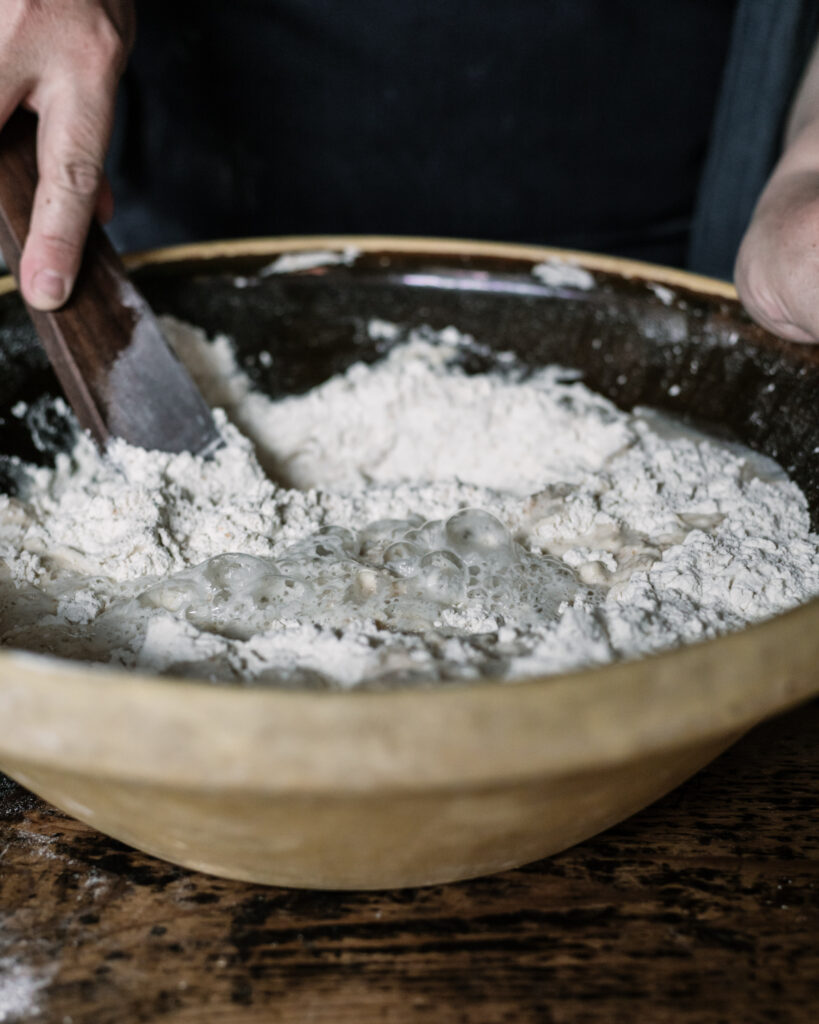
    Sourdough starter being mixed into flour in a bowl
    Photo: William George James, CC BY-SA 4.0, via Wikimedia Commons

    Week one: settle it in

    Your starter has moved from a warm bakery to your kitchen and it will sulk. Feed it once a day with equal weights of flour and water, discarding all but a spoonful first. Keep it somewhere steady, away from the window. Do not bake with it yet.

    Week two: find its rhythm

    By now it should rise and fall on a predictable schedule, usually doubling four to eight hours after a feed. Note the time it peaks. That peak is when it is strongest, and it is when you want to mix your dough.

    Week three onwards: the fridge

    If you bake once a week, keep the starter in the fridge and feed it once a week. Take it out the day before you bake, give it two feeds at room temperature, and it will be ready.

    Signs it is fine, even when it looks alarming

    • A grey liquid on top. That is alcohol from a hungry starter. Pour it off and feed.
    • A sharp, vinegary smell. Same cause, same cure.
    • No rise after one feed. Give it three before worrying.

    The one sign it really is finished: pink or orange streaks, or fuzzy mould. Throw it away and ask us for another jar. We have plenty.

  • Meet Priya, our new head of pastry

    If the croissants have seemed flakier lately, you are not imagining it. Priya Nair joined us this spring to lead the pastry side, and she has spent three months quietly taking the whole section apart and putting it back together.

    Priya trained in a hotel kitchen, then spent six years at a bakery she describes only as “much bigger than this, with a much worse oven”. She arrived with a notebook of recipes, a rolling pin she will not let anyone else touch, and strong opinions about butter temperature.

    Lamination is mostly patience and a cold room. The rest is not being afraid to throw away a batch that is not right.

    Priya Nair

    The changes so far: a slower proof for the croissants, a switch to a cultured butter from a dairy an hour away, and a new pain au chocolat with two batons of dark chocolate instead of one. The cinnamon knot is also hers, and she would like it on the record that it is a knot, not a bun.

    Say hello if you see her at the counter on Saturdays. Do not ask to borrow the rolling pin.

  • A no-knead loaf you can make at home

    A no-knead loaf you can make at home

    This is the loaf we teach on the first half of our Saturday class, written down so you can make it without us. It needs no starter, no mixer and almost no kneading. It does need time, so start it the evening before you want to bake.

    Ingredients

    • 500 g strong white bread flour
    • 10 g fine salt
    • 2 g instant yeast (about half a teaspoon)
    • 375 g water at room temperature

    Method

    1. In a large bowl, stir the flour, salt and yeast together. Add the water and mix with a spoon or your hand until there is no dry flour left. It will look rough and sticky. That is correct.
    2. Cover the bowl and leave it at room temperature for 12 to 18 hours. The dough is ready when it has roughly doubled and the surface is dotted with bubbles.
    3. Tip the dough onto a floured surface, fold the edges into the middle to make a rough ball, and turn it seam-side down. Rest it for an hour under a tea towel.
    4. Put a lidded cast-iron pot in the oven and heat to 240°C for 30 minutes.
    5. Lift the dough into the hot pot, cover, and bake for 30 minutes. Remove the lid and bake 15 minutes more, until the crust is deep brown.
    6. Cool on a rack for at least an hour before cutting. The inside is still cooking.

    Once this works for you, swap 100 g of the white flour for wholemeal. Once that works, come to the class and we will talk you into a starter.

  • Why the lights are on at 4 a.m.

    People ask us two questions more than any other. The first is whether the country loaf is sourdough (it is). The second is why the lights in the back are on at four in the morning. The honest answer is that bread keeps its own hours, and ours are the ones it keeps.

    Golden croissants piled on a tray
    Photo: ViajeroExtraviado, CC0, via Wikimedia Commons

    A sourdough loaf that comes out of the oven at seven was started almost two days earlier. The starter is fed on the first afternoon, the dough is mixed the next morning, it rises slowly through the day and then spends the night in the cold room. By four the next morning it is ready, and it will not wait politely until a more civilised hour.

    Pastry is similar. Croissant dough is laminated the afternoon before and shaped at the end of the day, so that it proves overnight. At four, the first job is turning on the oven, which takes almost an hour to come up to temperature. The second job is coffee.

    A typical morning

    1. 4:00: oven on, dough out of the cold room.
    2. 4:45: first loaves scored and loaded.
    3. 5:30: pastry goes in as the bread comes out.
    4. 6:15: wholesale orders packed for the bicycle.
    5. 7:00: doors open, and the queue is already there.

    We have tried starting later. The bread was fine; the queue was not. So four o’clock it is.